Research
Identifiability of evolutionary histories
With Steven Kelk, Mark Jones, Martin Frohn and Niels Holtgrefe.
@article{frohn2026bounds,
  author = {Frohn, Martin and Holtgrefe, Niels and van Iersel, Leo and Jones, Mark and Kelk, Steven},
  title = {Bounds on the sequence length sufficient to reconstruct binary level-1 phylogenetic networks under the {CFN} model},
  journal = {Annals of Combinatorics},
  doi = {10.1007/s00026-026-00830-0},
  year = {2026}
}

Determines how much genetic sequence data is actually needed to reconstruct a common type of evolutionary network with high confidence, showing that the required amount of data scales predictably with the number of species involved.
SQUIRREL
Reconstructing semi-directed phylogenetic level-1 networks from four-leaved networks or sequence alignments.
Optimization for and with Machine Learning
With Karen Aardal, Dick den Hertog, Etienne de Klerk, Monique Laurent, Guido Schäfer, Leen Stougie, Esther Julien, Giulia Bernardini and others.
@article{bernardini2024inferring,
  author = {Bernardini, Giulia and van Iersel, Leo and Julien, Esther and Stougie, Leen},
  title = {{Inferring Phylogenetic Networks from Multifurcating Trees via Cherry Picking and Machine Learning}},
  journal = {Molecular Phylogenetics and Evolution},
  year = {2024},
  volume = {199},
  pages = {108137},
  doi = {10.1016/j.ympev.2024.108137},
  url = {https://doi.org/10.1016/j.ympev.2024.108137}
}
Presents FHyNCH, software that combines a tree-simplification technique with machine learning to reconstruct evolutionary networks from large collections of trees, even when those trees are only partially resolved and cover different, overlapping sets of species — a scale and flexibility beyond what earlier methods could handle.

FHyNCH
Finding Hybridization Networks via Cherry-picking Heuristics, constructing rooted phylogenetic networks from rooted multifurcating trees with missing leaves.
Treewidth Parameterizations of Network Construction Problems in Phylogenetics
With Mark Jones.
@article{jones2023embedding,
  author = {Jones, Mark and Weller, Mathias and van Iersel, Leo},
  title = {{Embedding phylogenetic trees in networks of low treewidth}},
  journal = {Discrete Mathematics & Theoretical Computer Science},
  year = {2023},
  volume = {25},
  number = {2},
  pages = {2},
  archivePrefix = {arXiv},
  eprint = {2207.00574},
  url = {https://arxiv.org/abs/2207.00574}
}

Describes an algorithm for checking whether a proposed evolutionary tree is consistent with a network, based on a general measure of how tree-like the network's underlying structure is, extending fast verification to a broader range of networks than earlier specialized methods could handle.

Scanwidth
Exact and heuristic algorithms for computing the scanwidth of a directed acyclic graph.
Encoding, reconstructing and comparing complex evolutionary scenarios
With Mark Jones, Yukihiro Murakami and Remie Janssen.
@article{iersel2022orchard,
  author = {van Iersel, Leo and Janssen, Remie and Jones, Mark and Murakami, Yukihiro},
  title = {{Orchard Networks are Trees with Additional Horizontal Arcs}},
  journal = {Bulletin of Mathematical Biology},
  year = {2022},
  volume = {84},
  pages = {76}
}

Shows that a class of evolutionary networks introduced purely for its computational advantages actually corresponds to a natural and biologically meaningful picture — an ordinary tree with extra sideways connections representing horizontal gene transfer — and proves that one can always move between any two such networks via a bounded number of small rearrangement steps.

Computing Optimal Tree-Child Networks for Sets of Binary Phylogenetic Trees
Optimally reconstructing tree-child networks for sets of binary trees.
Bringing phylogenetic networks to life
@article{bapteste2013networks,
  author = {Bapteste, Eric and van Iersel, Leo and Janke, Axel and Kelchner, Scot and Kelk, Steven and McInerney, James O and Morrison, David A and Nakhleh, Luay and Steel, Mike and Stougie, Leen and Whitfield, James},
  title = {{Networks: expanding evolutionary thinking}},
  journal = {Trends in Genetics},
  year = {2013},
  volume = {29},
  number = {8},
  pages = {439--441}
}
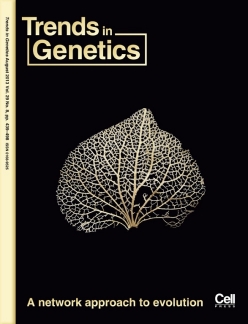
Argues that evolutionary relationships are often better represented by networks than by trees alone. The article highlights how network models capture reticulation and complex genomic histories.

Cass
Combines any set of phylogenetic trees into a phylogenetic network representing all clusters of all input trees.